
Osazee Christian Edigin
Full Article: View PDF
Licence: 
How to cite
Edigin O.Ch.,The Role of Political Parties in National Integration and Development in Nigeria, “Polish Journal of Political Science”, 2026, Vol. 12, Issue 1, pp. 52–82, DOI: 10.58183/pjps.03012026.
ABSTRACT
Political parties are central to national integration and sustainable development in Nigeria’s multi-ethnic democracy. This study critically evaluates the extent to which political parties have fulfilled this role, using a mixed-method approach that combines quantitative data from a national survey of 542 respondents with content analysis of party structures, leadership composition, and regional voting patterns. Despite their constitutional mandate to unify diverse interests, findings reveal that political parties in Nigeria often reflect and reinforce ethnic, regional, and religious divisions rather than bridge them. Leadership distribution across major parties shows imbalances that fuel perceptions of exclusion, while voting patterns indicate a strong alignment along ethno-regional lines. Public attitudes further highlight widespread dissatisfaction with political inclusion, especially among minority and marginalized groups. While some parties have pursued development-oriented policies that foster inclusivity, these efforts are frequently undermined by corruption, majority dominance, and intra-party favoritism. Ethnic loyalty and religious bias continue to shape political behavior, weakening the integrative potential of party politics. The study concludes that without deliberate reforms to promote equitable representation, internal democracy, and national interest-driven governance, political parties will remain a source of fragmentation rather than unity. This research contributes to ongoing debates on democratic consolidation by emphasizing the need for political parties to adopt inclusive strategies and transparent practices that can strengthen national cohesion and advance broad-based development in Nigeria.
Keywords: political parties, national integration, ethnic groups, religious fanaticism, national development
Introduction
The political landscape of Nigeria is a complex product of its colonial history, particularly the events following the Berlin Conference of 1884–1885. This conference, driven by European imperial interests, divided Africa into artificial nation-states, grouping together various ethnic groups with no shared history or identity. Nigeria, like many other African countries, inherited an amalgamation of over 250 ethnic groups, leading to a fragile national identity and recurring tensions.[1] These colonial boundaries disrupted pre-existing socio-political structures, laying the foundation for the integration challenges that Nigeria continues to face today.
After independence in 1960, the emergence of political parties became central to the nation’s democratic development. However, most of these parties, such as the Action Group (AG), Northern People’s Congress (NPC), and National Council of Nigeria and the Cameroons (NCNC), were formed along ethnic and regional lines, reflecting rather than resolving Nigeria’s deep social divisions.[2] As such, political parties have often failed to function as instruments of integration and inclusive development.
Political parties, in theory, play a vital role in democracy by aggregating interests, mobilizing citizens, shaping policy discourse, and providing political representation.[3] In Nigeria’s case, their potential to unify the country and drive development is significant but has often been undermined by ethno-regional loyalties, patronage politics, and a lack of ideological clarity.[4] Rather than promoting national unity, many parties are perceived as platforms for elite competition, often mirroring ethnic or religious fault lines.[5]
This paper therefore explores the dual role of political parties in promoting national integration and driving sustainable development in Nigeria. Using an analysis of party manifestos, policy programs, and interviews with political actors, the study evaluates the effectiveness of these parties in achieving inclusive governance and socioeconomic progress. While democratic consolidation has expanded since 1999, there remains significant room for reform in how political parties operate to foster unity and development.[6]
Objectives
This paper sets out among other things:
- To critically assess the role of political parties in national integration.
- To assess the role or contribution of political parties in national development.
- To examine how ethnic loyalty and religious fanaticism have led to disintegration in Nigeria.
Research Questions
This research will be dedicated to answering three basic research questions:
- What is the role of political parties in national integration?
- What role have political parties played in national development?
- Are ethnic loyalty and religious fanaticism the significant causes of disintegration in Nigeria?
Research Hypotheses
Ho1: The ethnic composition of political parties does not significantly affect national integration.
Ho2: The dominance of majority ethnic groups in political leadership does not hinder national unity.
Ho3: The pursuit of ethnic and religious dominance by political parties does not significantly contribute to national disintegration.
Literature Review and Theoretical Framework
Historical Context of Political Parties in Nigeria
The evolution of political parties in Nigeria has been shaped by the country’s colonial experience and its subsequent struggles for independence and national integration. In the early 20th century, political mobilization began as nationalist movements and intellectual associations. Organizations such as the National Congress of British West Africa (NCBWA), formed in 1920, and the West African Students’ Union (WASU), founded in 1925, were instrumental in challenging colonial authority and advocating for African self-governance.[7] These early movements were not political parties in the conventional sense but served as the intellectual and organizational foundations upon which modern Nigerian parties were later built.
The formation of the Nigerian National Democratic Party (NNDP) in 1923, led by Herbert Macaulay, is widely regarded as Nigeria’s first modern political party. The NNDP participated in elections to the Lagos Legislative Council and championed the political interests of Lagos elites.[8] This was followed by the emergence of the Nigerian Youth Movement (NYM) in 1934, which represented a more pan-Nigerian and youth-driven approach to nationalist politics. The NYM was initially non-ethnic and inclusive, drawing support from across ethnic and religious lines, with key figures such as Ernest Ikoli, Samuel Akinsanya, and Dr. J.C. Vaughan playing leading roles.[9] However, internal leadership disputes and ethnic tensions eventually weakened the movement.
By the 1940s and 1950s, the formation of regionally based political parties began to dominate Nigeria’s political scene. The Northern People’s Congress (NPC) represented the interests of the predominantly Muslim North; the Action Group (AG) was based in the Yoruba-dominated Western Region, while the National Council of Nigeria and the Cameroons (NCNC) drew support from the Igbo-speaking East and minority Southern groups. While these parties were effective in mobilizing grassroots participation and advancing self-rule, their regional and ethnic focus often undermined efforts at national integration.[10] Rather than functioning as unifying forces, they entrenched ethno-regional divisions and contributed to post-independence political instability.
During the Second Republic (1979–1983), Nigeria adopted a presidential system of government and attempted to create more ideologically driven political parties. However, despite initial optimism, many of the parties were still largely ethnic-based in support and character. Political instability, electoral malpractice, and inter-party rivalry led to the collapse of the Second Republic and the return of military rule in 1983.[11] This era further delayed the institutionalization of stable, inclusive party systems. With the dawn of the Fourth Republic in 1999, Nigeria returned to democratic rule, and political parties were re-established under a new constitutional framework. The People’s Democratic Party (PDP) emerged as the dominant party in the early years of the republic, maintaining power at the federal level from 1999 until 2015. In 2015, a coalition of opposition parties led to the formation of the All Progressives Congress (APC), which unseated the PDP in a historic election.[12] This peaceful transfer of power was a major milestone in Nigeria’s democratic development. However, both parties have been criticized for lacking ideological distinctiveness and operating primarily as vehicles for elite interests. Despite democratic gains, challenges such as corruption, internal party fragmentation, vote-buying, and ethnic-based zoning arrangements continue to hinder the ability of political parties to promote unity and sustainable development.[13] As such, while Nigeria has made strides in party evolution, the fundamental structure and orientation of these parties often reflect the same ethno-regional cleavages that characterized earlier phases of political development.[14]
The Concept of National Integration and Development
National integration presupposes diversity. It refers to the process of strengthening the subjective bond between people who may already share minimal national characteristics, such as geographic territory or political identity. At its core, national integration involves the unification of diverse social, ethnic, economic, and religious groups into a cohesive and functional nation-state. In multiethnic democracies like Nigeria, this process is central to peacebuilding and long-term development.[15] Olumuyiwa Temitope Faluyi underscores that national integration in Nigeria is challenged by ethnic rivalries and rotational power-sharing arrangements, yet these mechanisms, when properly negotiated, can sustain political stability and development.[16] Similarly, Oyebola Okunogbe, using empirical evidence from Nigeria, finds that exposure to other ethnic regions fosters greater national identity and reduces intergroup prejudice, highlighting integration’s role in mitigating regional tensions.[17]
The relationship between national integration and national development is mutually reinforcing. Where national identity is stronger, citizens are more likely to feel a sense of belonging and responsibility toward state-building. As Olayode Kayode Adesoye, Ekanade Israel and Rakubu Kholofelo argue, inclusive political systems that address gender and ethnic representation are vital to good governance and sustainable development.[18] Political inclusion, therefore, becomes a critical engine of integration. Political parties are instrumental in this process. Jacob M. Grumbach asserts that parties are no longer just vehicles for competition but institutions that shape the structural foundation of democracy.[19] In countries like Nigeria, where state loyalty is often undermined by ethnic cleavages, national political parties serve as bridging institutions that connect citizens to the State. However, party defection is common in Nigeria, which weakens this integrative function.[20]
Moreover, the national development process depends on efficient bureaucratic and political institutions. According to Kayode Asaju and Evans Ayeni, the challenges of public bureaucracy in Nigeria, ranging from politicization to corruption, hinder the effective implementation of national development goals.[21] Where bureaucracies are weak or captured by patronage networks, integration efforts suffer. National development must also be inclusive and participatory. Mordecai Oweibia et al. argue that Nigeria’s journey toward achieving the Sustainable Development Goals (SDGs) demonstrates the necessity of aligning national policies with grassroots participation and broad stakeholder engagement. Their findings emphasize that progress in health, education, and infrastructure is most successful when programs reflect the heterogeneous composition of the country.[22]
In a comparative context, countries like South Africa and India, also multi-ethnic democracies, show that national integration is often pursued through institutional reforms, affirmative action policies, and decentralized governance models. Nigeria’s own federal structure offers similar potential if it is genuinely leveraged to accommodate diversity.[23] Therefore, national integration in Nigeria is not merely a moral or theoretical imperative; it is a developmental necessity. The role of political parties, state institutions, and deliberate integrative policies is central to fostering a cohesive national identity and achieving sustainable development.
The Role of Political Parties in National Integration
Political parties are central to uniting diverse ethnic, religious, and regional interests in multi-ethnic democracies like Nigeria. Their structure and operations provide a framework through which divergent societal interests can be harmonized, thereby fostering national integration.[24] As Grumbach notes in his comparative study of the United States, national parties play a transformative role in aligning state-level politics with broader democratic ideals, a concept increasingly relevant in multi-ethnic democracies, including Nigeria.[25] In the Nigerian context, political parties such as the People’s Democratic Party (PDP) and the All Progressives Congress (APC) have attempted to promote national cohesion through zoning arrangements and inclusion-focused manifestos.[26] However, these efforts often fall short in practice. Faluyi argues that such practices as rotational presidency, while intended to preserve national unity, may paradoxically entrench ethnic bargaining and political tokenism.[27] Similarly, Ibrahim Braji highlights the destabilizing effects of party defection, emphasizing that frequent cross-carpeting among party elites undermines ideological clarity and national solidarity.[28] Furthermore, Okunogbe empirically demonstrates that exposure to other ethnic groups, often facilitated by political mechanisms such as the National Youth Service Corps (NYSC), significantly improves attitudes toward national unity.[29] However, when political parties fail to institutionalize such integrative experiences within their organizational structure, ethnic polarization persists. A common criticism is that Nigerian political parties function more as electoral machines than as ideologically grounded institutions. Adesoye, Israel, and Kholofelo observe that this orientation weakens their role in building democratic culture and sustainable governance.[30] Party platforms rarely articulate distinct socio-political programs, and their intense competition for power and state resources often fuels ethno-religious tensions rather than healing them.
Political Parties’ Efforts Toward National Integration and Development
Political parties are not only political actors but also policy-making institutions with the capacity to shape national development and integration.[31] A number of initiatives in Nigeria, such as the NYSC, state creation, and national orientation campaigns, have been historically supported or implemented under the aegis of ruling political parties. These policies aimed to mitigate ethnic and regional fragmentation while promoting a shared national identity.
For instance, the NYSC, established under the military but maintained across party administrations, has played a key role in cross-regional exposure. Okunogbe affirms the integrative effect of inter-regional interactions in building national consciousness.[32] Similarly, the expansion of states, though originally politically motivated, has improved infrastructure access and development opportunities for minority regions, thus reducing centrifugal pressures. Olusẹgun Obasanjo’s “National Rebirth Program” and its anchor agency, the National Orientation Agency (NOA), also aimed at re-engineering national values and promoting unity post-military rule. While these efforts show the developmental intentions of political leadership, scholars like Asaju and Ayeni argue that public bureaucracy and weak political accountability often limit policy impact.[33]
Furthermore, Sustainable Development Goals (SDGs) are increasingly influencing party manifestos and national agendas. Oweibia et al. provide a critical review of Nigeria’s progress on SDGs, noting that political commitment and inclusivity remain key challenges.[34] Political parties must internalize development goals within their platforms not just rhetorically but through actionable and people-centered governance. The media also plays a complementary role in political mobilization and national integration. According to Abubakar Bappayo, Ahmad Abubakar, Yushau Haruna Kirfi, local media institutions like Plateau Radio Television Corporation have been instrumental in shaping political consciousness and reinforcing national narratives.[35] Political parties that effectively use such platforms can promote cohesion and participatory democracy more robustly.
Challenges to National Integration
Religious fanaticism and ethnic loyalty remain formidable threats to Nigeria’s national integration. Persistent violent clashes, especially between Muslims and Christians, have destabilized interethnic coexistence in various regions, particularly in Northern Nigeria.[36] In states like Kaduna, sectarian violence has led to the destruction of worship centers, displacement of communities, and loss of lives, events that deepen inter-communal mistrust and weaken the collective national identity.
While these clashes are often framed as religious, underlying ethnic sentiments exacerbate tensions. Ethnic loyalty continues to overshadow national allegiance. As noted by Okunogbe, exposure to ethnically diverse regions can foster national unity, yet in Nigeria, mobility is often hindered by structural biases and fears of marginalization.[37] This entrenched loyalty to ethnic groups, manifested in political mobilization, voting patterns, and patronage, fragments the national consensus needed for integration. Political exclusion of minority groups, particularly the Igbo, remains a historical and unresolved issue. The continuous absence of an Igbo president has fueled secessionist movements, such as those led by the Indigenous People of Biafra (IPOB), which echo earlier demands from the Biafran War. This marginalization contradicts the ideals of federal character and equitable representation that Nigeria’s constitution seeks to uphold.[38] Ethnic groups excluded from presidential leadership often interpret this as systemic rejection, thereby intensifying demands for restructuring or independence.
Additionally, the “derivation principle” in oil revenue sharing has fueled discontent in the Niger Delta, where communities perceive themselves as exploited despite being resource-rich. This has furthered regionalist agendas, stoking resentment toward the federal structure and undermining a shared national vision. According to Adesoye, Israel, and Kholofelo, inclusive governance and gender-equity reforms must be integral to sustainable development and national cohesion, but current structures still reflect exclusionary tendencies.[39] Furthermore, the role of state institutions in mediating these grievances remains weak. Asaju and Ayeni observe that Nigeria’s bureaucracy lacks the efficiency and neutrality necessary to address ethnic grievances without bias, further eroding public trust in government mechanisms.[40]
Institutional Theory
Institutional theory offers a compelling lens through which to understand the role of political parties in shaping national integration and development, particularly in a multi-ethnic democracy like Nigeria. Given Nigeria’s heterogeneous composition comprising numerous ethnic, religious, and political groupings, political behavior is not solely a matter of rational calculation or utility maximization. Rather, as B. Guy Peters explains in his articulation of the “new institutionalism,” institutions structure political life by embedding norms, expectations, and practices that constrain and shape behavior over time.[41] Political parties in Nigeria do not exist in a vacuum. They are embedded in a sociopolitical environment marked by ethnic competition, regional cleavages, and historical grievances. Institutional theory posits that both formal structures (e.g., constitutions, party charters) and informal norms (e.g., zoning, patronage networks) determine how parties engage with the public and how they pursue national integration. In this sense, Claus Wendt builds on Weberian traditions to argue that institutional legitimacy stems not only from legal-rational authority but also from shared cultural and symbolic systems that give meaning to political action.[42]
Applying this to Nigeria, parties that embrace inclusive national ideologies and promote inter-group alliances help reinforce a shared sense of national identity. Conversely, when parties organize around ethnic or sectional lines, they often deepen societal fragmentation. Alice Sindzingre and Howard Stein emphasize that institutions can either facilitate or hinder integration depending on their internal coherence and external legitimacy.[43] They further argue that development is not simply an economic goal but a sociopolitical process tied to institutional quality and responsiveness. Comparative studies from other multi-ethnic democracies such as India and South Africa illustrate how institutional arrangements like federalism, proportional representation, and affirmative action can mediate ethnic tensions and enable broader participation. These examples demonstrate the potential of well-structured institutions to act as platforms for national cohesion rather than division.
Furthermore, institutional capacity plays a pivotal role in shaping national outcomes. As Dominic Ayegba Okoliko notes in his study of Nigeria’s development governance, institutional weakness, manifested in limited bureaucratic professionalism and executive overreach, undermines long-term planning and integration.[44] Strengthening institutions therefore requires not only structural reforms but also the development of internal party democracy and mechanisms for accountability. M.E. Adepoju provides evidence that institutional oversight functions, such as those performed by the National Assembly in implementing the Sustainable Development Goals (SDGs), are critical to advancing equitable development outcomes.[45] Political parties, as gatekeepers of legislative processes, therefore have a dual responsibility: to reflect societal diversity and to channel it toward a coherent national vision.
In conclusion, understanding political parties through the lens of institutional theory reveals that they are not neutral actors but dynamic entities shaped by and capable of shaping the socio-political environment. Promoting institutional accountability, internal party reform, and cross-ethnic coalition-building is crucial to fostering national integration and sustainable development in Nigeria and other multi-ethnic societies.
Methodology
Research Design
This study adopted a mixed-methods research design to provide a comprehensive understanding of the role of political parties in promoting national integration and development in Nigeria. The mixed-methods approach combined both quantitative and qualitative techniques to capture the multi-dimensional nature of political participation, ethnic diversity, and institutional performance in the Nigerian context.
Population of the Study
The population for this study comprised Nigerian citizens aged 18 years and above across the six geopolitical zones: North-Central, North-East, North-West, South-East, South-South, and South-West. Eligible respondents included individuals with varying levels of political awareness, civic participation, and party affiliation. This broad demographic ensured that the study captured diverse experiences and perceptions, including those of voters, civil society actors, youth groups, and persons with historical knowledge of party politics in Nigeria.
Sample Size Determination
To determine an appropriate sample size, Cochran’s formula for sample size calculation was applied, using a 95% confidence level, a margin of error of 4%, and a population proportion of 0.5 to ensure maximum variability. The formula is stated as:
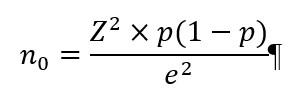
Substituting:

Hence, a final sample size of 600 respondents was considered.
Sampling Technique
To achieve national representativeness, a stratified multistage sampling technique was employed. The initial stratification was based on Nigeria’s six geopolitical zones. Within each zone, two states were randomly selected to capture intra-regional diversity. These included FCT and Kwara (North-Central); Borno and Gombe (North-East); Kano and Sokoto (North-West); Imo and Anambra (South-East); Rivers and Edo (South-South); and Lagos and Ekiti (South-West), as shown in Table 1.
Table 1. Sample size distribution by zone-state
|
Zone |
States Selected |
Respondents per Zone |
|
North-Central |
FCT, Kwara |
100 |
|
North-East |
Borno, Gombe |
100 |
|
North-West |
Kano, Sokoto |
100 |
|
South-East |
Imo, Anambra |
100 |
|
South-South |
Rivers, Edo |
100 |
|
South-West |
Lagos, Ekiti |
100 |
|
Total |
600 |
Source: Own study.
Instrumentation
The primary instrument for data collection was a research-designed questionnaire, structured into four sections: Section A covered respondents’ demographics; Section B explored perceptions of political parties and national integration; Section C assessed the parties’ roles in national development; and Section D addressed ethnic and religious influences on political disintegration. Items included both multiple-choice and Likert scale formats to quantify attitudes and opinions. For qualitative analysis, a content analysis checklist was developed to examine the composition and orientation of political parties, drawing on manifestos, official records, and leadership demographics.
Validity and Reliability of the Instrument
To ensure validity, the instrument was reviewed by experts in political science, sociology, and research methodology. A pilot test involving 30 respondents from different zones was conducted, leading to refinements for clarity and relevance. Reliability was measured using Cronbach’s alpha, yielding a coefficient of 0.82, indicating strong internal consistency. These steps guaranteed that the instrument would reliably measure the constructs under investigation.
Method of Data Collection
Data collection was carried out using both online and offline methods. Digital questionnaires were disseminated through platforms like Google Forms to respondents in internet-enabled areas, especially in urban regions. In contrast, printed versions were administered by trained assistants in rural and underrepresented areas. This dual approach addressed disparities in digital access, ensuring inclusivity across socioeconomic and geographic divisions. Respondents were briefed on the study’s purpose, and participation was voluntary.
Method of Data Analysis
The study employed both descriptive and inferential statistical techniques using SPSS software. Descriptive statistics such as frequencies, percentages, means, and standard deviations were used to summarize data patterns. Inferential tools like Chi-square tests and Pearson’s correlation coefficients assessed relationships between key variables, such as political affiliation and perceptions of integration. Furthermore, content analysis of political party documents was performed to assess patterns of ethnic representation, leadership structures, and ideological coherence. Secondary data from the Independent National Electoral Commission (INEC), National Bureau of Statistics (NBS), and official party records were triangulated to enrich interpretation.
Ethical Considerations
All procedures adhered to standard ethical research protocols. Informed consent was obtained from participants, who were assured of confidentiality, anonymity, and the right to withdraw at any stage without consequence. Data were collected and stored in line with institutional ethical guidelines, and the results were used solely for academic purposes. Ethical clearance was obtained prior to data collection, and participant rights were respected throughout the process.
Results and Discussion
Out of the 600 distributed questionnaires, a total of 542 valid responses were received, representing a response rate of 90.3%. The analysis presents both descriptive and inferential statistics, as well as content analysis of political party structures to assess the ethnic composition and implications for national integration and development.
Demographic Analysis
Table 2. Summary of demographic characteristics of respondents
|
Variable |
Category |
Frequency (n) |
Percent (%) |
|
Age Group |
18–25 |
132 |
24.4% |
|
26–35 |
148 |
27.3% |
|
|
36–45 |
162 |
29.9% |
|
|
46 and above |
100 |
18.5% |
|
|
Gender |
Male |
312 |
57.6% |
|
Female |
230 |
42.4% |
|
|
Highest Level of Education |
No Formal Education |
84 |
15.5% |
|
Primary Education |
98 |
18.1% |
|
|
Secondary Education |
142 |
26.2% |
|
|
Tertiary Institution |
218 |
40.2% |
|
|
Region of Residence |
North-Central |
94 |
17.3% |
|
North-East |
65 |
12.0% |
|
|
North-West |
103 |
19.0% |
|
|
South-South |
95 |
17.5% |
|
|
South-West |
143 |
26.4% |
|
|
South-East |
83 |
15.3% |
|
|
Occupation |
Student |
172 |
31.7% |
|
Unemployed |
65 |
12.0% |
|
|
Worker |
305 |
56.3% |
|
|
Political Party Affiliation |
APC |
102 |
18.8% |
|
PDP |
89 |
16.4% |
|
|
Labour Party |
118 |
21.8% |
|
|
Others |
145 |
26.8% |
|
|
None |
88 |
16.2% |
Source: Own study.
Table 2 presents the demographic characteristics of the respondents (N=542) who participated in the study. The age distribution of respondents indicates a balanced representation across generational categories, ensuring insights from both younger and older citizens. Respondents aged 18–25 constituted 24.4%, while those in the 26–35 age bracket made up the largest proportion at 27.3%. The 36–45 group followed closely with 29.9%, indicating strong representation of economically active adults. Those 46 years and above accounted for 18.5%, ensuring that older citizens’ perspectives were not neglected in the study. Gender distribution revealed a higher participation of male respondents (57.6%) compared to females (42.4%), which may reflect broader gender-based patterns in political engagement or survey participation rates in Nigeria. Nonetheless, both sexes were sufficiently represented for comparative analysis. In terms of educational attainment, the data reveals a diverse spread across educational backgrounds. No formal education accounted for 15.5%, while primary education made up 18.1%. Respondents with secondary education represented 26.2%, and those with tertiary education, including university and polytechnic graduates, comprised the largest group at 40.2%. This stratification improves the inclusiveness of the study, accommodating responses from both the formally educated and undereducated populations.
Regionally, the study captured inputs from all six geopolitical zones in Nigeria, enhancing the national relevance of the findings. The South-West had the highest share of respondents at 26.4%, followed by the North-West at 19.0% and South-South at 17.5%. The North-Central zone contributed 17.3%, while the South-East and North-East accounted for 15.3% and 12.0%, respectively. This even distribution reflects deliberate effort in the sampling strategy to achieve geographical inclusiveness and balance. Occupationally, more than half of the respondents (56.3%) identified as workers, including both public and private sector employees. Students comprised 31.7%, emphasizing youth political interest, while the unemployed accounted for 12.0%, whose opinions are particularly critical in discussions around governance and economic policy. Regarding political party affiliation, a plurality of respondents (26.8%) identified with other smaller parties, reflecting a growing diversification in political preferences beyond the major parties. The Labour Party was next at 21.8%, followed by the All Progressives Congress (APC) with 18.8%, and the People’s Democratic Party (PDP) with 16.4%. Interestingly, 16.2% of respondents indicated no political affiliation, which may point to political apathy or indecision. Overall, the demographic structure of the sample supports a robust and inclusive analysis of political party influence across Nigeria’s diverse population landscape.
Research Question 1: What is the role of political parties in national integration?
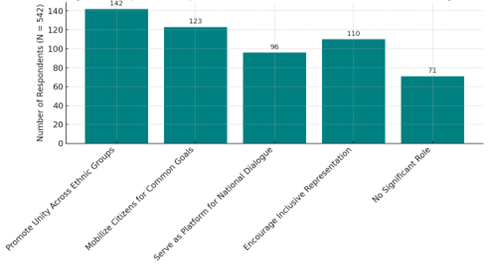
Figure 1. Respondents’ opinions on the role of political parties in national integration
Source: Own study.
Figure 1 presents the distribution of respondents’ perspectives on the role of political parties in national integration based on a total sample of 542 participants. The largest proportion of respondents (142 individuals, representing 26.2%) identified the promotion of unity across ethnic groups as the most significant contribution of political parties, underscoring the public’s view of parties as critical instruments for fostering national cohesion. Similarly, a substantial proportion acknowledged the mobilization of citizens for common goals (123 respondents, 22.7%) and the encouragement of inclusive representation (110 respondents, 20.3%) as key roles played by political parties. Additionally, 96 participants (17.7%) emphasized the function of political parties as platforms for national dialogue, highlighting the value of participatory governance. Notably, only 71 respondents (13.1%) expressed the belief that political parties have no meaningful role in national integration, suggesting a broadly shared recognition of their integrative potential.
Table 3. Relationship between perceived ethnic representation in political parties and national integration[46]
|
|
|
Political Parties Promote National Integration |
|
||
|
|
Yes |
No |
Not Sure |
Total |
|
|
Perception of Equal Ethnic Representation |
Yes |
111 (77.1%) |
11 (7.6%) |
22 (15.3%) |
144 (100%) |
|
No |
183 (34.1%) |
183 (34.1%) |
171 (31.8%) |
537 (100%) |
|
|
Not Sure |
44 (29.1%) |
49 (32.5%) |
58 (38.4%) |
151 (100%) |
|
|
|
Total |
338 (62.4%) |
243 (44.8%) |
251 (46.3%) |
542 (100%) |
Source: Own study.
Table 3 shows the relationship between perceptions of ethnic representation in political parties and their perceived contribution to national integration. Among respondents who believed that political parties ensure equal ethnic representation, a substantial majority (77.1%) agreed that political parties promote national integration. This indicates a strong positive association between perceived ethnic inclusiveness and confidence in the integrative role of political parties.
In contrast, respondents who perceived ethnic representation as unequal expressed divided opinions: 34.1% believed political parties contribute to national integration, an equal proportion (34.1%) disagreed, while 31.8% were uncertain. Similarly, among respondents who were unsure about the level of ethnic representation, views were mixed, with the largest proportion (38.4%) expressing uncertainty about the integrative role of political parties.
Research Question 2: Do political parties contribute to national development in Nigeria?
Table 4. Summary of respondents’ views on political parties and national development
|
Question |
Response Category |
Frequency |
Percentage (%) |
|
Do political parties contribute to national development? |
Yes |
173 |
31.9% |
|
No |
254 |
46.9% |
|
|
Not Sure |
115 |
21.2% |
|
|
Do parties implement economic development policies? |
Yes |
110 |
20.3% |
|
No |
278 |
51.3% |
|
|
Not Sure |
154 |
28.4% |
|
|
Are parties more focused on power retention than development? |
Strongly Agree |
307 |
56.7% |
|
Agree |
173 |
31.9% |
|
|
Disagree |
47 |
8.7% |
|
|
Strongly Disagree |
15 |
2.7% |
Source: Own study.
Table 4 highlights respondents’ skepticism regarding the developmental impact of political parties. A majority (46.9%) rejected the notion that parties contribute meaningfully to national development, while only 31.9% affirmed such a role. Likewise, just 20.3% believed that parties actively implement economic development policies, compared to 51.3% who said they do not. Notably, a striking 88.6% of respondents (307 who strongly agreed and 173 who agreed) believed that political parties are more concerned with retaining power than pursuing development goals. These findings reflect a deep-seated distrust among Nigerians regarding the motives and performance of the country’s political elite.
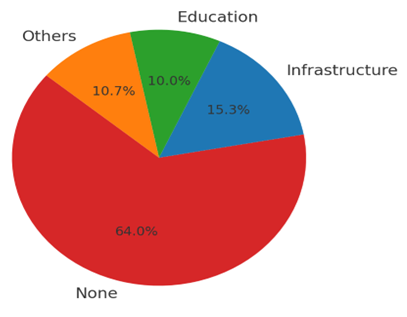
Figure 2. Sectors Benefited by Political Party Policies
Source: Own study.
The figure reveals that a striking 64.0% of respondents indicated that no sector has significantly benefited from political party policies. While infrastructure (15.3%) and education (10.0%) were acknowledged to some extent, the overwhelming majority believes party-driven policy impact is negligible across sectors.
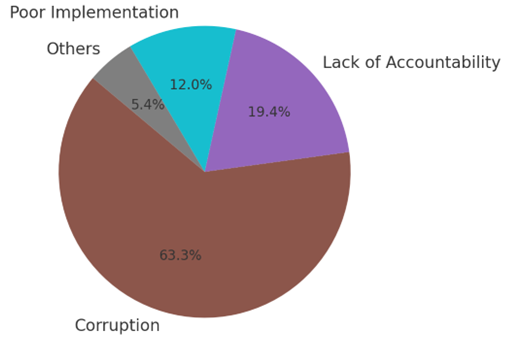
Figure 3. Major barriers to political parties’ role in development (Q16)
Source: Own study.
In Figure 3, corruption was overwhelmingly cited as the key barrier (63.3%) preventing political parties from driving national development. Other notable issues included lack of accountability (19.3%) and poor implementation of policies (12.0%). These findings emphasize the urgent need for institutional reforms in party structures and governance.
Research Question 3: Are ethnic loyalty and religious fanaticism the significant causes of disintegration in Nigeria?
Table 5. Summary of responses on ethnic loyalty, religious fanaticism, and political disintegration in Nigerian politics
|
Question |
Response Category |
Frequency |
Percentage (%) |
|
Does ethnic loyalty affect political decision-making? |
Yes |
427 |
78.8% |
|
No |
72 |
13.3% |
|
|
Not Sure |
43 |
7.9% |
|
|
Total |
542 |
100.0% |
|
|
How often do politicians use ethnic/religious sentiments? |
Always |
416 |
76.8% |
|
Sometimes |
101 |
18.6% |
|
|
Rarely |
18 |
3.3% |
|
|
Never |
7 |
1.3% |
|
|
Total |
542 |
100.0% |
|
|
Has religious fanaticism contributed to political instability? |
Yes |
398 |
73.4% |
|
No |
90 |
16.6% |
|
|
Not Sure |
54 |
10.0% |
|
|
Total |
542 |
100.0% |
|
|
Do ethnic/religious affiliations influence voting patterns? |
Strongly Agree |
282 |
52.0% |
|
Agree |
210 |
38.7% |
|
|
Disagree |
43 |
7.9% |
|
|
Strongly Disagree |
7 |
1.3% |
|
|
Total |
542 |
100.0% |
|
|
Biggest cause of political disintegration? |
Corruption |
220 |
40.6% |
|
Ethnic Divisions |
145 |
26.8% |
|
|
Poor Leadership |
130 |
24.0% |
|
|
Religious Intolerance |
47 |
8.7% |
|
|
Total |
542 |
100.0% |
|
|
Measures to minimize ethnic/religious division? |
Promoting Inclusive Governance |
148 |
27.3% |
|
Enforcing Stricter Electoral Laws |
134 |
24.7% |
|
|
Strengthening Civic Education |
112 |
20.7% |
|
|
Encouraging Non-Partisan Leadership |
148 |
27.3% |
|
|
Total |
542 |
100.0% |
Source: Own study.
Table 5 reveals strong public perceptions that ethnic loyalty and religious influence significantly shape political behavior and contribute to political fragmentation in Nigeria. A substantial majority of respondents (78.7%) affirmed that ethnic loyalty affects political decision-making, underscoring the persistent dominance of ethnic identity in Nigeria’s political landscape and its adverse implications for national integration. Similarly, an overwhelming proportion of respondents (76.8%) reported that politicians consistently exploit ethnic and religious sentiments for political mobilization, while an additional 18.6% indicated that such practices occur occasionally. This pattern confirms the entrenched role of identity-based politics in electoral competition and party strategies.
Religious fanaticism was also widely perceived as a destabilizing factor, with 73.4% of respondents agreeing that it contributes to political instability. The influence of identity on voting behavior is particularly pronounced, as 90.7% of respondents either agreed or strongly agreed that ethnic or religious affiliations shape voting patterns. This finding raises serious concerns about democratic consolidation and inclusive governance in Nigeria’s plural society. Beyond identity factors, respondents identified corruption (40.6%) as the foremost cause of political disintegration, followed by ethnic divisions (26.8%), poor leadership (24.0%), and religious intolerance (8.7%). These results suggest that while identity politics remains influential, structural and governance-related challenges play an equally critical role in undermining political stability. In terms of solutions, respondents prioritized promoting inclusive governance and encouraging non-partisan leadership (27.3% each) as the most effective measures for reducing ethnic and religious divisions. Other recommended strategies included enforcing stricter electoral laws (24.7%) and strengthening civic education (20.7%). Collectively, these responses reflect a strong public demand for equitable representation, institutional reform, and issue-based political engagement as pathways to national integration and sustainable development.
Table 6. Ethnic composition of leadership in major political parties (2023)
|
Political Party |
Northern (Hausa-Fulani) |
Western (Yoruba) |
Eastern (Igbo) |
Middle-Belt (Tiv, Idoma, etc.) |
Minority (South-South/South-East & others) |
Total Executive Members |
|
Party (APC) |
8 (40%) |
4 (20%) |
3 (15%) |
2 (10%) |
3 (15%) |
20 |
|
Party (PDP) |
5 (25%) |
5 (25%) |
4 (20%) |
3 (15%) |
3 (15%) |
20 |
|
Party (LP) |
7 (35%) |
6 (30%) |
2 (10%) |
3 (15%) |
2 (10%) |
20 |
Source: Compiled by the researcher from official party documents, leadership lists, and public records of the All Progressives Congress (APC), People’s Democratic Party (PDP), and Labour Party (LP), 2023.
Table 6 provides empirical evidence of the ethnic composition of leadership within major political parties in Nigeria and serves as a structural explanation for perceptions of exclusion discussed earlier in the study. The table demonstrates that leadership positions in political parties are unevenly distributed across ethnic groups, with the Northern (Hausa-Fulani) and Western (Yoruba) groups occupying a disproportionate share of executive positions, particularly within the APC and LP. In the APC, the dominance of the Northern group (40%) compared to the relatively lower representation of the Igbo (15%) and minority groups (10–15%) reflects an imbalance in political power distribution. Although the PDP shows a comparatively more balanced ethnic configuration, subtle inequalities persist, especially in the representation of minority groups. Similarly, the LP, despite its reformist image, exhibits limited inclusion of Igbo and minority groups in leadership positions. By revealing these structural imbalances, Table 6 directly supports the study’s argument that political parties in Nigeria often reproduce ethnic hierarchies rather than promote inclusive national representation. This pattern helps explain why many respondents perceive political parties as instruments of ethnic dominance rather than vehicles for national integration.
Table 7. Hypothetical distribution of voting patterns by region (2023 presidential election)
|
Region |
APC (%) |
PDP (%) |
LP (%) |
Invalid/Other (%) |
|
North-East |
58.2 |
21.4 |
14.7 |
5.7 |
|
North-West |
60.5 |
22.0 |
12.5 |
5.0 |
|
North-Central |
38.4 |
34.2 |
22.3 |
5.1 |
|
South-West |
25.3 |
58.1 |
11.2 |
5.4 |
|
South-East |
16.1 |
23.5 |
55.3 |
5.1 |
|
South-South |
22.4 |
32.7 |
39.3 |
5.6 |
|
FCT |
33.3 |
39.8 |
22.1 |
4.8 |
Source: Own study.
Table 7 illustrates clear patterns of ethnic and regional voting based on hypothetical 2023 presidential election outcomes. APC received overwhelming support from the North-East (58.2%) and North-West (60.5%), indicating strong northern alignment, potentially tied to ethnic loyalty. PDP led in the South-West (58.1%) and FCT (39.8%), suggesting urban and South-Western acceptance. LP dominated in the South-East (55.3%) and gained significant traction in the South-South (39.3%), aligning with perceptions of LP as a South-Eastern favored platform. The North-Central region showed a relatively mixed voting pattern, with PDP (34.2%) and APC (38.4%) close, reflecting its transitional ethnic identity. These results suggest that electoral choices are heavily influenced by ethno-regional affiliations rather than national ideological preferences, undercutting the integrative potential of elections. The dominance of the APC in the North-East and North-West, the strong performance of the PDP in the South-West and the Federal Capital Territory, and the overwhelming support for the LP in the South-East and South-South demonstrate that electoral behavior in Nigeria is largely shaped by ethno-regional affiliations. The mixed voting pattern observed in the North-Central region further highlights its transitional ethnic and political character.
By connecting leadership composition with voting behavior, Table 7 reinforces the study’s claim that ethnic identity remains a central determinant of political competition in Nigeria. This undermines the integrative function of elections and weakens the capacity of political parties to serve as platforms for national unity.
Table 8. Cross-tabulation of ethnic group vs. satisfaction with political inclusion
|
Ethnic Group |
Satisfied (%) |
Neutral (%) |
Dissatisfied (%) |
Total |
|
Hausa-Fulani |
68.4 |
15.3 |
16.3 |
120 |
|
Yoruba |
60.5 |
20.2 |
19.3 |
110 |
|
Igbo |
28.4 |
18.6 |
53.0 |
100 |
|
Tiv/Idoma/Middle-Belt |
34.0 |
26.0 |
40.0 |
80 |
|
Others (South-South, minorities) |
31.6 |
23.7 |
44.7 |
132 |
Source: Own study.
Table 8 complements the structural and electoral evidence by examining how different ethnic groups perceive their level of political inclusion. The findings reveal stark disparities in satisfaction levels across ethnic groups, with Hausa-Fulani and Yoruba respondents reporting significantly higher satisfaction with political inclusion than Igbo, Middle-Belt, and minority respondents. The high level of dissatisfaction among the Igbo (53.0%), Middle-Belt (40.0%), and minority groups (44.7%) reflects perceived marginalization in access to political power and representation. Conversely, the relatively high satisfaction among Hausa-Fulani (68.4%) and Yoruba (60.5%) respondents corresponds with their stronger presence in party leadership and national political structures, as shown in Table 6. By linking subjective perceptions (Table 8) with objective structural data (Table 6) and electoral outcomes (Table 7), the study demonstrates a consistent pattern: ethnic dominance in party leadership produces ethno-regional voting behavior and reinforces perceptions of exclusion among less-represented groups.
Taken together, Tables 6, 7, and 8 provide a coherent empirical framework for understanding the role of political parties in national integration and development in Nigeria. Table 6 identifies the structural inequalities within party leadership, Table 7 shows how these inequalities manifest in electoral behavior, and Table 8 reveals how they shape public perceptions of political inclusion. Collectively, these findings substantiate the central argument of this study: rather than functioning as instruments of national integration and inclusive development, political parties in Nigeria often operate as arenas of ethnic competition and exclusion. This structural and perceptual disconnect between political representation and national unity explains the persistent fragility of Nigeria’s integrative project and highlights the urgent need for institutional reforms that promote equitable representation, internal party democracy, and issue-based politics.
Hypothesis Testing
Table 9. Chi-square summary of hypothesis testing (N=542)
|
Hypothesis |
χ² |
df |
p-value |
Decision |
|
H₀₁: Ethnic composition does not affect national integration |
36.84 |
4 |
0.0000 |
Rejected |
|
H₀₂: Majority dominance does not hinder unity |
18.62 |
2 |
0.0001 |
Rejected |
|
H₀₃: Ethnic loyalty and religious fanaticism do not significantly influence political disintegration |
24.15 |
4 |
0.0000 |
Rejected |
Source: Own study.
The hypothesis testing results in Table 10 remain statistically significant, further strengthening the study’s conclusions. The first hypothesis (H₀₁), stating that ethnic composition does not affect national integration, is rejected with a Chi-square value of 36.84, df = 4, and p < 0.0001. This confirms a strong relationship between ethnic representation in political structures and the perception of national cohesion. Nigerians are more likely to feel integrated when their ethnic groups are visibly included in leadership.
For the second hypothesis (H₀₂), the Chi-square value is 18.62 with df = 2 and a p-value of 0.0001, leading to the rejection of the null hypothesis. This indicates that perceived majority ethnic dominance in political institutions poses a real threat to national unity. It highlights dissatisfaction among minority groups who feel sidelined in national affairs.
Lastly, the third hypothesis (H₀₃), linking ethnic loyalty and religious fanaticism to political disintegration, yields a Chi-square statistic of 24.15, df = 4, and a p-value < 0.0001. This finding strongly supports the notion that deep-rooted identity politics based on ethnicity and religion significantly undermines political harmony and integration in Nigeria.
Conclusion and Recommendations
Conclusion
Based on the perceptions and assessments of the respondents surveyed, this study finds that political parties in Nigeria are widely perceived as falling short of their expected role as instruments of national integration and inclusive development. Rather than being viewed as platforms for bridging ethnic, religious, and regional divides, political parties are perceived by many respondents as institutions that often reflect and reinforce existing social cleavages, contributing to feelings of exclusion, declining public trust, and weakened democratic legitimacy.
The findings indicate that ethnic and religious considerations continue to significantly influence party leadership structures, voting behavior, and electoral strategies, as reflected in respondents’ views and supported by patterns observed in party leadership composition and regional voting tendencies. Similarly, weaknesses in internal party democracy, corruption, and limited accountability are perceived as major constraints on the capacity of political parties to contribute meaningfully to national development and nation-building.
Importantly, while these findings do not constitute definitive claims about the objective performance of political parties in Nigeria, they reveal a strong pattern of public perception that political parties are not fully fulfilling their integrative and developmental roles. Such perceptions are themselves significant, as they shape political attitudes, participation, and the legitimacy of democratic institutions.
Recommendations
In light of these findings, several measures are recommended to strengthen the integrative and developmental capacity of political parties in Nigeria.
First, political parties and state institutions should prioritize inclusive representation by promoting merit-based leadership, equitable ethnic and regional participation, and internal party democracy. Such reforms would address perceptions of exclusion and enhance confidence in party institutions.
Second, legal and institutional frameworks governing political parties and elections should be strengthened to ensure transparency, accountability, and credible electoral processes. This would help reduce the manipulation of ethnic and religious identities for political gain.
Third, sustained public education and civic enlightenment programs should be intensified to encourage issue-based political participation and reduce identity-driven voting behavior. Strengthening civic awareness can foster more rational and policy-oriented political engagement among citizens.
Fourth, comprehensive anti-corruption reforms and mechanisms to improve transparency and accountability within political parties are essential for restoring public trust in political institutions.
Finally, sustained intergroup dialogue and social cohesion initiatives should be supported to mitigate ethnic and religious tensions and promote a shared sense of national identity. Such efforts are critical for enhancing national integration and advancing inclusive development in Nigeria.
References
[1] N.E. Nnani, The Politics of National Leadership and Democratic Consolidation in Nigeria, “University of Nigeria Journal of Political Economy”, 2022, Vol. 12, No. 2, pp. 321–340.
[2] A.P. Innocent, Internal Party Democracy and Party Institutionalization in Nigeria: Implication for Democratic Consolidation-1999-2015, A PhD Thesis Submitted to the College of Law, Government and International Studies, Universiti Utara Malaysia 2019.
[3] A.O. Moliki, Party leadership, intraparty crisis and democratic consolidation in Southwest Nigeria, “Islamic University Multidisciplinary Journal”, 2020, Vol. 7, No. 2, pp. 108–120; V. Randall, L. Svåsand, Political parties and democratic consolidation in Africa, “Democratization”, 2002, Vol. 9, Issue 3, pp. 30–52, DOI: 10.1080/714000266.
[4] N. Obianyo, I.M. Alumona, Democratic decay or democratic autocracy? Party primaries and the challenges of democratic consolidation in Nigeria 1999–2019, in: Anonymous Power: Parties, Interest Groups and Politics of Decision Making in Nigeria’s Fourth Republic (Essays in Honour of Elochukwu Amucheazi), eds. O. Ibeanu, I.‘K. Okoye, I.M. Alumona, E.T. Aniche, Springer Nature Singapore 2022, pp. 291–325.
[5] A.I. Abbas, Political parties and inter-party conflicts in Nigeria: Implications for democratic consolidation, “International Journal of Political Science and Development”, 2016, Vol. 4, Issue 6, pp. 216–230.
[6] H. Onapajo, D. Babalola, Nigeria’s 2019 general elections – a shattered hope?, “The Round Table”, 2020, Vol. 109, Issue 4, pp. 363–367, DOI: 10.1080/00358533.2020.1788765.
[7] G.T. Agbede, K.M. Oparinde, Tribalism: A thorny concern in Nigerian politics–A discursive review and appraisal, “FWU Journal of Social Sciences”, 2024, Vol. 18, Issue 1, pp. 46–55.
[8] M. Ette, P. Akpan-Obong, Negotiating access and privilege: Politics of female participation and representation in Nigeria, “Journal of Asian and African Studies”, 2023, Vol. 58, Issue 7, pp. 1291–1306, DOI: 10.1177/00219096221084253.
[9] R. Cohen, Labour and politics in Nigeria, Routledge 2024.
[10] A.A. Idowu, A.S. Iyabode, Voting Pattern and Voting Behaviour in 2023 Presidential Elections in Nigeria: A Cursory Prognosis, “Journal of Administrative Science”, 2024, Vol. 21, No. 1, pp. 95–126.
[11] M.M. Heaton, History of Nigeria, in: Oxford Research Encyclopedia of African History, Oxford University Press 2024, DOI: 10.1093/acrefore/9780190277734.013.1349.
[12] G.T. Agbede, K.M. Oparinde, Tribalism: A thorny…, op. cit., pp. 46–55.
[13] M. Ette, P. Akpan-Obong, Negotiating access and…, op. cit., pp. 1291–1306.
[14] K.O. Olayode, Ethno-Regional Cleavages and Voting Behavior in the 2015 General Elections: Issues and Challenges for Democratization and Nation Building, Paper Presented at a Two – Day National Conference on “The 2015 General Elections in Nigeria: The Real Issues” 2015.
[15] O. Okunogbe, Does exposure to other ethnic regions promote national integration? Evidence from Nigeria, “American Economic Journal: Applied Economics”, 2024, Vol. 16, No. 1, pp. 157–192; O.T. Faluyi, Nigeria and ‘Negotiated Elections’: Examining the Impact of Rotational Presidency on Peace, the National Question, and Development, “African Journal of Inter/Multidisciplinary Studies”, 2022, Vol. 4, No. 1, pp. 180–194, DOI: 10.51415/ajims.v4i1.995.
[16] O.T. Faluyi, Nigeria and ‘Negotiated…, op. cit., pp. 180–194.
[17] O. Okunogbe, Does exposure to…, op. cit., pp. 157–192.
[18] O.K. Adesoye, E. Israel, R. Kholofelo, Addressing the Gender Bias: Positioning Nigeria’s Democracy for Good Governance and Sustainable Development, “e-BANGI Journal”, 2025, Vol. 22, Issue 2, pp. 595–606, DOI: 10.17576/ebangi.2025.2202.48.
[19] J.M. Grumbach, Laboratories against democracy: How national parties transformed state politics, Princeton University Press 2022.
[20] I. Braji, Political Party Defection: A Reflection on the Current Wave in Nigeria’s Political Process, “Concrescence Journal of Multi-disciplinary Research”, 2025, Vol. 2, No. 2, pp. 196–207.
[21] K. Asaju, E. Ayeni, Public bureaucracy and national development in Nigeria: Issues and challenges, “Nigerian Journal of Administrative and Political Sciences”, 2021, Vol. 5, No. 1, pp. 69–90.
[22] M. Oweibia, et al., Analyzing Nigeria’s Journey Towards Sustainable Development Goals: A Comprehensive Review From Inception To Present, “F1000 Research”, 2024, Vol. 13, pp. 1–31, DOI: 10.12688/f1000research.148020.1.
[23] A.U. Umana, et al., The role of government policies in promoting social housing: A comparative study between Nigeria and other developing nations, “World Journal of Advanced Research and Reviews”, 2024, Vol. 23, No. 03, pp. 371–382.
[24] A.A. Muhammad, Political Parties and National Integration: Reflections on Nigeria Since 1999, “Journal of Sustainable Development in Africa”, 2007, Vol. 9, No. 4, pp. 211–228.
[25] J.M. Grumbach, Laboratories against democracy…, op. cit.
[26] O.T. Faluyi, Nigeria and ‘Negotiated…, op. cit., pp. 180–194.
[27] Ibidem.
[28] I. Braji, Political Party Defection…, op. cit., pp. 196–207.
[29] O. Okunogbe, Does exposure to…, op. cit., pp. 157–192.
[30] O.K. Adesoye, E. Israel, R. Kholofelo, Addressing the Gender…, op. cit., pp. 595–606.
[31] H.I. Orjinta, N.O. Ameh, Political Parties and National Integration in Nigeria, “African Journal of Politics and Administrative Studies (AJPAS)”, 2020, Vol. 13, No. 2, pp. 72–84.
[32] O. Okunogbe, Does exposure to…, op. cit., pp. 157–192.
[33] K. Asaju, E. Ayeni, Public bureaucracy and…, op. cit., pp. 69–90.
[34] M. Oweibia, et al., Analyzing Nigeria’s Journey…, op. cit., pp. 1–31.
[35] A. Bappayo, A. Abubakar, Y.H. Kirfi, The impact of mass media on political mobilization process in Plateau State Radio Television Corporation, Jos (PRTVC), Nigeria, “NIU Journal of Humanities”, 2021, Vol. 6, No. 1, 101–108.
[36] A. Adamu, D. Ocheni, Ethnic Politics and the Challenges of National Integration in Nigeria, “International Journal of Politics and Good Governance”, 2016, Vol. VII, No. 7.2, pp. 1–20.
[37] O. Okunogbe, Does exposure to…, op. cit., pp. 157–192.
[38] O.T. Faluyi, Nigeria and ‘Negotiated…, op. cit., pp. 180–194.
[39] O.K. Adesoye, E. Israel, R. Kholofelo, Addressing the Gender…, op. cit., pp. 595–606.
[40] K. Asaju, E. Ayeni, Public bureaucracy and…, op. cit., pp. 69–90.
[41] B.G. Peters, Institutional theory in political science: The new institutionalism, Edward Elgar Publishing 2019.
[42] C. Wendt, Max Weber and institutional theory, Springer 2016.
[43] A. Sindzingre, H. Stein, Institutions, Development, and Global Integration: A Theoretical Contribution, 2002, https://content.csbs.utah.edu/~ehrbar/erc2002/pdf/i017.pdf, (access 06.11.2025).
[44] D.A. Okoliko, Exploring Institutional Capacity of the State to Facilitate Economy Development in Nigeria, Doctoral dissertation, Department of Political Science, University of KwaZulu-Natal, South Africa 2014.
[45] M.E. Adepoju, An Evaluation of the Oversight Function of National Assembly in the Implementation of Sustainable Development Goals in Nigeria, Doctoral dissertation, NILDS-Department of Studies 2022.
[46] Percentages are based on row totals.